Wind power, characterized by its renewability, pollution-free nature, and high energy output, has garnered significant attention in the energy sector. Today, we introduce two cutting-edge wind turbine technologies.
Google X | Flying Wind Turbine, Are You That Desperate?
In the words of Astro Teller, head of Google X Lab, they specialize in solving problems that humans cannot. This secretive lab, which calls itself a "moonshot factory," spends at least $7 billion of Google's annual revenue continuously developing future technologies. In 2013, they acquired wind energy startup Makani, announcing their entry into wind power by creating electricity-generating kites. Now, this groundbreaking idea is set to officially launch in April of this year.
Do you want to work so hard? Google is going to build wind turbines
Makani fan for Google X
The wind turbine named "Makani" looks like a kite flying in the air and is tied to the ground tower through high-strength and ultra-light carbon fiber ropes. Each kite is approximately 25.6 meters long, equipped with 8 propellers, and has a power generation capacity of 600 kW. When the kite flies into the air, it will drive the wind turbine to generate electricity in a large circle in the air. The kite can rise to a maximum height of about 426 meters.
How exactly does this big kite generate electricity? Kite wind motors mainly generate electricity by driving wind turbine blades. A fixed platform on the ground uses a horizontal propeller similar to a helicopter propeller to fly the kite wind motor. When the kite flies to an altitude with stable wind speed, the kite begins to circle in a large diameter. Air flows through the wind turbine blades, causing them to spin and generate electricity, which is then transmitted via ropes to a fixed platform on the ground and a connected power grid.
Wind turbines need to fly into the sky to generate electricity. Astro Teller, head of the Google Not only that, the Makani that generates electricity by facing the wind can choose the most suitable angle to capture wind energy according to the wind direction. It is also crazy to become a wind-chasing (kite) generator in order to generate electricity.
Comparison of electricity production between traditional wind turbines and power generation kites
According to information on the Makani+Google official website, compared with traditional wind turbines, the production cost of power-generating kites is significantly reduced, and the materials required are only 10% of traditional wind turbines. Not only that, but judging from U.S. environmental conditions, each power-generating kite generates 50% more energy than traditional wind turbines.
So will this April's flight be a success? Astro Teller said at SXSW that the secret to Google X's success is failing fast. But so far, the 26-foot-long prototype kite wind turbine has not experienced a single failure in test runs. This brings mixed feelings for Teller—joy because once commercialized, the technology could promote the use of clean energy, representing a revolutionary breakthrough; worry because success means they have yet to push their current technology to its limits.
The success of this Google X kite wind turbine is crucial for overcoming the current technical challenges faced by high-altitude wind turbines. For example, whether the kite, serving as both a wind energy harvester and a stabilizer for the system, can maintain its durability and stability; how airborne wind power can cope with severe weather, achieve effective recovery, and prevent ground towers from being destroyed by lightning strikes caused by the tether.
Regardless of the outcome, this invention by Google X is bound to spark a new wave in the wind energy industry, carve out fresh commercial markets amid the near-saturation of solar energy, transform existing power supply models, and usher in a revolution in clean energy.
Altaeros Energies | Wind Turbine Like a Hot Air Balloon
Although this wind turbine cannot be called a smart one and looks a bit silly-cute ( ω ), never doubt its power generation capability—high-altitude winds are strong, and it generates twice the electricity compared to conventional heights. It might even be the next direction for wind power development.
The floating turbine wind generator, named Buoyant Airborne Turbine (BAT), was developed and manufactured by Altaeros Energies, a clean energy company under the Massachusetts Institute of Technology. It is a small hollow airship filled with hydrogen, with a large wind turbine installed at its center. It can float at an altitude of 304 meters to harness wind for power generation and transmit the energy back to the ground.
The adorable BAT is not afraid of rainstorms and does not affect birds or aircraft. BAT engineers have programmed it to autonomously dock at its ground station when encountering winds of 100 mph and heavy rain, resuming power generation after the storm. BAT's flight altitude is limited to within 600 meters, and its shell is equipped with lightweight indicators and a nighttime warning light to alert nearby aircraft.
In addition to being equipped with a large fan, the BAT also has spare payload capacity to carry additional systems such as mobile phone antennas, VHF/UHF walkie-talkie antennas, wireless internet, video and infrared cameras, and meteorological equipment.
BAT has another significant advantage: it "works hard without consuming resources." The second-largest cost in wind power generation is transportation and installation. BAT eliminates the need for large cranes, tower cranes, or the infrastructure of restricted ground-based wind projects, saving 90% of installation and transportation costs compared to traditional wind turbines. Even more astonishingly, it generates twice the energy of wind turbines of the same class mounted on towers. Traditional wind turbines, tremble!
 Focus on fan equipment production for 24 years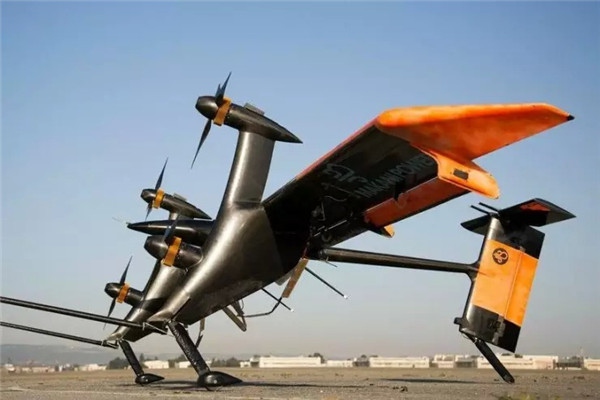


 湘公网安备 43012102000705号